 Flagler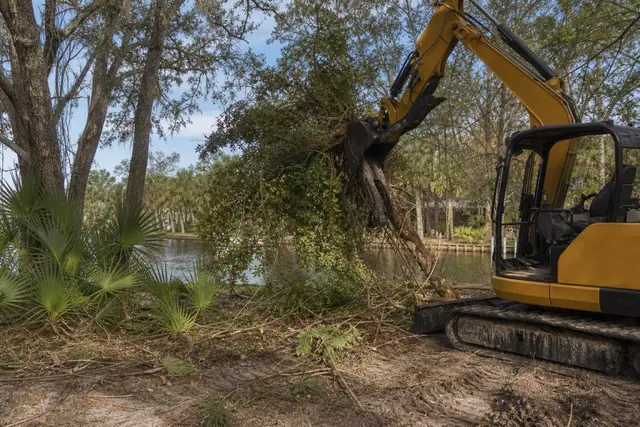
Flagler Clearing Pros connects Palm Coast property owners with a local land clearing contractor for brazilian pepper removal in Palm Coast and the Flagler County communities around it.
Brazilian pepper is the weed tree that ate coastal Florida, and Flagler County has its share — sprawling multi-trunk thickets along canal banks, ditch lines, old fence rows, and the sunny edges of any disturbed ground. It shades out everything beneath it, drops berries that birds ferry to the next open lot, and regrows from cut trunks with real enthusiasm. Removing it is less like tree work and more like ending an occupation.
The plant's legal status tells you how seriously the state takes it. It sits on Florida's prohibited lists — unlawful to plant, move, or propagate — and land managers across the state spend real budgets pushing it back. None of that obligates a private owner to remove theirs, but it explains why a pepper thicket left alone becomes the seed source for every neighbor downwind.
Effective removal is a two-part act. Part one is mechanical: trunks cut or excavated, the thicket mulched or hauled, root plates grubbed where equipment can reach. Part two is chemical, and skipping it is the classic failure — a freshly cut pepper stump pushes new shoots within weeks unless the cut surface is treated immediately with an appropriate herbicide. Cut-and-treat in the same pass, then a follow-up check the next season, is the pattern that actually ends the tree.
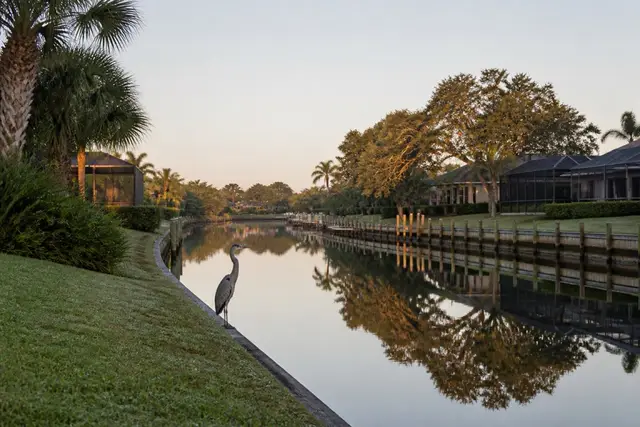
On canal-front lots the job earns its keep twice: the view returns, and the bank stops accumulating a monoculture that contributes nothing to bank stability while crowding out native cover. Machines work the top of bank with reach-in attachments so the waterway itself stays undisturbed.
Know the tree you're fighting
Brazilian peppertree (Schinus terebinthifolia) is profiled by the Florida Natural Areas Inventory as one of the state's most damaging invasives: fast-growing, shade-casting, allelopathic to the plants below it, and spread widely by berry-eating birds. It is also a cashew relative — sap contact gives some people a poison-ivy-style rash, which is a real reason homeowners with loppers tend to lose interest halfway through a thicket. The state takes the species seriously enough to fund a biological control program releasing host-specific insects against it.
Identification matters because it shares fence lines with harmless natives. Compound leaves with a winged central stalk, a turpentine smell when crushed, and the winter show of red berries are the tells. When in doubt, a photo settles it before anything gets cut.
Cut-stump treatment: the step that makes it permanent
UF/IFAS control guidance for Brazilian peppertree is blunt on the point: mechanical removal alone invites resprouting from stumps and surface roots, so each cut trunk gets its outer cambium ring painted with a systemic herbicide within minutes of the saw. Larger clearing jobs sequence this tightly — one part of the operation cuts, another follows with the treatment — because a stump that dries before treatment may need re-cutting.
Disposal is the other discipline. Berries ride mulch to new ground, so berry-laden material gets hauled or staged where seed cannot wash toward open sand — a detail that separates removal from redistribution. Expect a good quote to name its herbicide approach and its debris route; both are checkable promises.