 Flagler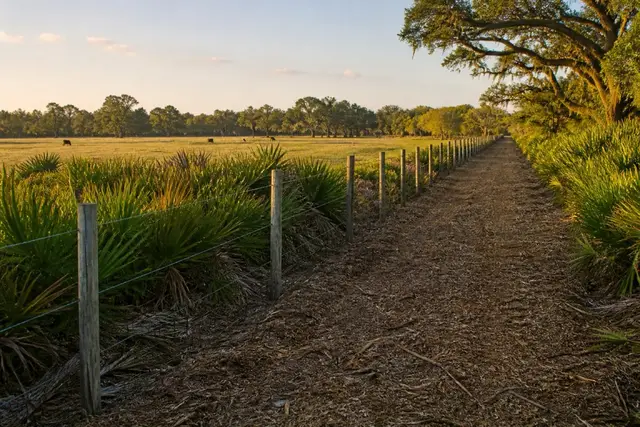
Flagler Clearing Pros connects Palm Coast property owners with a local land clearing contractor for fence line clearing in Palm Coast and the Flagler County communities around it.
Fence lines are where Flagler County's vegetation wins by attrition. Vines ride the wire, myrtle and pepper seed into the disturbed strip, palmetto leans in from both sides, and within a few unattended years the fence is a green wall with steel somewhere inside it. Fence line clearing cuts that corridor back to bare, walkable ground — typically a machine-width swath on one or both sides — so the line can be inspected, repaired, or rebuilt.
The rural west of the county generates most of this work. Ranch and acreage parcels around Bunnell, Daytona North, and the county's farm belt run fence by the mile, and a mulcher tracking a line at a steady walk replaces what would be weeks of hand-cutting. In town, the same service at smaller scale frees backyard fences from years of hedge creep before a replacement panel job.
Old fence lines hide hardware, and good operators plan for it. Downed wire, T-posts swallowed by trunks, and the occasional buried corner anchor will all meet the cutting head eventually, so the first pass runs slower and higher, with the operator reading the line for glint and stubs. Where the fence is being replaced entirely, clearing runs tight to the old run; where it stays, the head works a respectful offset and hand tools finish against the wire.
For new fencing on raw land, clearing the corridor first is the cheapest favor you can do the fence builder — straight sight lines for the stringing crew, clean post positions, and no surprises in the auger. Surveyors appreciate the same corridor for the same reasons.
Clear to the line you own, not the line you assume
The most expensive mistake in fence work is building — or clearing — on a guessed boundary. Older acreage fences in this county wander off their deeds more often than anyone likes to admit, having been set generations ago to convenience rather than survey. Before a corridor gets cut on a line with any doubt, corners get found or a surveyor sets them; the county's property records are the starting point, and pin-finding with a locator often settles it cheaply.
Where the neighbor's growth leans over the line, Florida's common-law rule of thumb applies — vegetation may be trimmed back to the boundary, not beyond it — and a shared-fence conversation before the machine arrives keeps the relationship as clean as the corridor.
Keeping a cleared line clear
A cleared corridor in this climate is a maintenance commitment, not a monument. Regrowth arrives from the seed bank and from berry-dropping birds using the fence as a perch — which is why pepper and cherry seedlings sprout in fence rows first. An annual or biennial mow of the corridor holds it indefinitely for a fraction of the first cut's price; guidance on identifying the invasive seedlings worth pulling on sight lives at the UF/IFAS invasive-plant center.
On grazed land the cattle help maintain their side, but the outside face of a perimeter fence still wants its regular pass — and dry-season cutting, when the Jacksonville forecast stops throwing daily storms, leaves the cleanest result on the county's soft flatwoods soil.