
Flagler
Clearing Pros
Service Area · Flagler County & Neighbors

Land Clearing in Espanola, FL

Rural clearing around the county's historic crossroads — homesites, fence lines, and plantation edges, with the Old Brick Road left in peace.

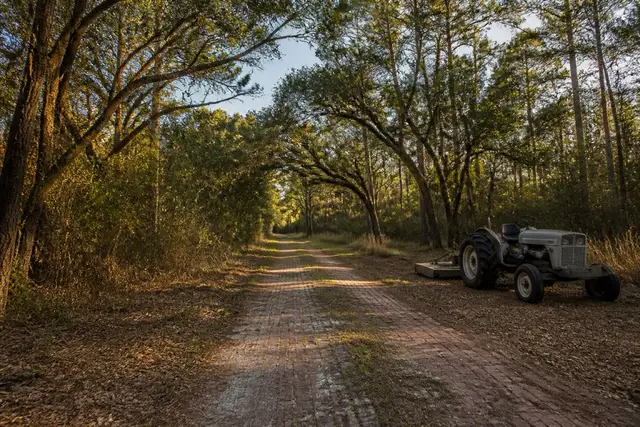
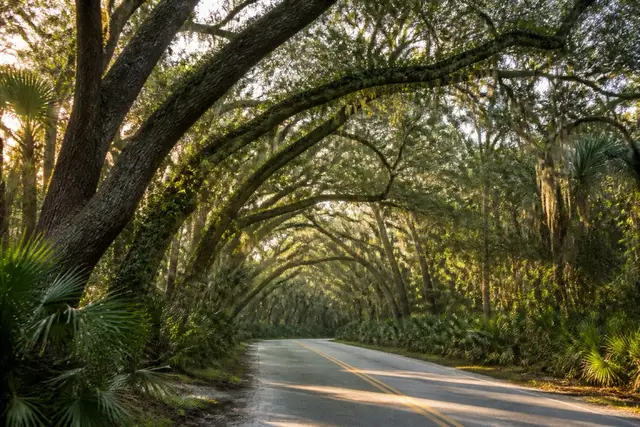
Brush cleared back from the edge of the historic Old Brick Road near Espanola with red bricks revealed and pine woods on both sides Live-oak canopy arching over a quiet two-lane road in The Hammock with backlit Spanish moss

Flagler Clearing Pros connects Espanola property owners with a local land clearing contractor for forestry mulching, lot clearing, and site prep across the Espanola area.

Espanola is the crossroads settlement where Flagler County's history runs closest to the surface — literally: the Old Brick Road, a nine-foot-wide stretch of the original 1916 Dixie Highway, still runs its red bricks through the pine woods here, one of the longest surviving pieces of that road anywhere in Florida. The community around it is rural acreage, pine plantation, and homesteads, and the clearing work matches: real parcels, real growth, practical goals.

Jobs in the Espanola area run the west-county catalog — homesites opened in planted pine and palmetto, fence lines recovered, access lanes cut and culverted, firebreak edges maintained around plantation blocks. The ground is classic flatwoods sand with the usual summer water table, and the growth comes back with the usual Florida enthusiasm, which keeps maintenance cycles part of every honest conversation.

The historic road adds one local courtesy: work near the brick corridor stays clear of it. The Old Brick Road is a fragile artifact maintained as a county treasure, machines don't track across it, and staging happens off its shoulders. It costs a job nothing to respect and would cost the county something irreplaceable not to.

Working around a hundred-year-old road

The Dixie Highway's Flagler County leg was completed around 1916 as a nine-foot ribbon of vitrified brick, and roughly nine miles of it survive near Espanola — drivable, historic, and irreplaceable. Clearing near the corridor follows museum rules: no machine crossings, no spoil on the brick, staging off the historic alignment. The county is the steward for questions about the road and its right-of-way, and the courtesy costs a project nothing but planning.

Plantation-country clearing

Much of the ground west of Espanola grows planted pine, and clearing there has its own vocabulary: firebreak lanes opened and maintained, block edges mulched, and thinning debris managed. Fire is a working tool in this landscape — the Florida Forest Service authorizes and tracks burns across these woods — and mulched breaks are part of what keeps managed fire manageable. Homestead parcels carved from plantation ground inherit the same sandy soils, mapped in the USDA Web Soil Survey, and the same rewarding response to a good clearing pass.

Questions

What owners ask first

Can you clear near the Old Brick Road without damaging it?

Yes — the rule set is simple and absolute: machines never track on or across the historic brick, no debris or spoil touches the corridor, and staging sits off its shoulders. Vegetation encroaching from a private parcel gets cut from the parcel side. The road has survived a century; no clearing job should be the thing that scars it.

What's involved in opening a homesite in planted pine?

Rows come out where the site plan says, stumps get ground or grubbed from the pad and drive footprints, and the surrounding stand is edged so it reads as intentional. Planted pine clears predictably — uniform stems, known spacing — which makes these some of the most quotable jobs in the west county. The drainage plan still decides where the pad goes.

Do you cut and maintain firebreaks?

Yes. Breaks get established at the widths the landowner or forestry plan calls for and re-mulched on cycle so they're actually bare when they're needed. A break that's grown back to waist-high fuel is a line on a map, not a firebreak. Plantation edges, homestead perimeters, and property-line breaks all price by the running foot after a look at the growth.

How does the summer water table affect Espanola-area work?

Same as the rest of the flatwoods: the sand firms up beautifully from late fall through spring and softens in the thunderstorm months, when heavy work slows and rutting risk rises. Plan grubbing, grading, and driveway building for the dry season where you can. Mowing and light mulching tolerate summer better, with judgment about the wettest weeks.

Is there a minimum job size out here?

Practically, mobilization sets it: hauling a machine to Espanola for an hour of cutting doesn't price well, so small scopes make sense bundled — the fence line plus the yard edge plus the lane, one visit. Neighbors coordinating on the same road can share a mobilization and both come out ahead. The quote lays those options out plainly.

Free · Ground walked first · No obligation

Put a written number on that overgrowth.