 Flagler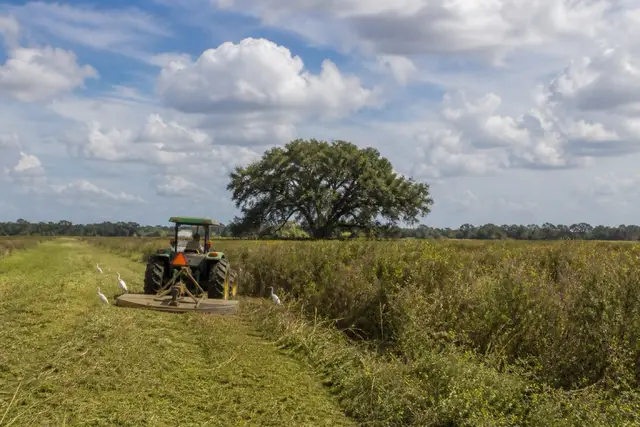
Flagler Clearing Pros connects Palm Coast property owners with a local land clearing contractor for pasture & acreage reclamation in Palm Coast and the Flagler County communities around it.
West of US-1, Flagler County turns agricultural — sod fields, potato ground, cattle land, and the acreage parcels around Bunnell and Daytona North where owners keep horses, run a few head, or simply want their fields to stay fields. Left unmowed for a handful of seasons, that open ground disappears under dog fennel, blackberry, wax myrtle, and pine seedlings. Reclamation is the work of taking it back.
The first pass is diagnostic as much as destructive. Shoulder-high fennel hides what a field has become — old ditch lines, feral fence wire, armadillo diggings, wet spots that will mire a tractor. A reclamation mow runs high and slow the first time, mapping the ground while it cuts, then drops to finish height on the second pass once the surprises are found.
Woody regrowth defines the price tier. Fennel and blackberry fall to a heavy rotary cutter; myrtle clumps and three-year pines want a mulcher; and a field abandoned a decade wants grubbing where the pine has genuinely established. The honest framing for owners: reclamation cost tracks the years of neglect, which is why the follow-up maintenance mow — once or twice a year — is the cheapest insurance in the catalog.
Reclaimed ground also has to drain to be usable. The county's old farm fields move water through shallow ditch networks that silt in during the overgrown years, and a reclamation scope that re-pulls those ditch lines finishes the job the mowing started: a field that not only looks open but carries stock and equipment through a wet June.
From fennel to forage: the recovery sequence
Knockdown mowing is step one; what makes a pasture is what follows. Bahiagrass — the backbone forage on Florida's sandy ground — usually survives under the weed canopy and thickens again with light, but fields gone too far want renovation: soil testing, lime and fertility to the numbers, and overseeding or sprigging in season. The agronomy is well documented in UF/IFAS pasture publications, and the local extension office remains the free second opinion smart owners actually use.
Preserved features get flagged before the first pass — the live oak islands that shade stock, the pond edge left rough for wildlife — because a reclamation mow is a plan, not an erasure.
Old-field hazards the machine has to respect
Decades-worked land accumulates iron: downed cross fences inside the growth, disc blades and implement parts gone to grass, culvert ends hiding in ditch lines. Cutting height and pass planning manage the risk, but so does the county's paper trail — parcel histories and aerials through the county often show where the old improvements ran before the fennel closed over them.
The other hazard is simply water. Flatwoods pasture rides a high seasonal water table, and a reclamation scheduled behind a wet week breaks ruts into ground the owner wanted healed. Watching the Jacksonville forecast for a dry stretch is part of the craft, not a delay tactic.