 Flagler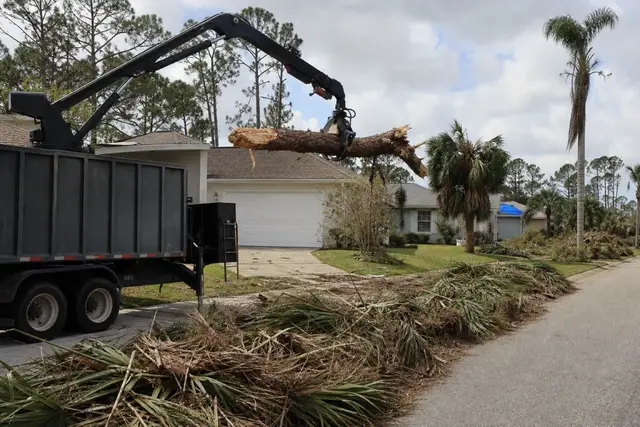
Flagler Clearing Pros connects Palm Coast property owners with a local land clearing contractor for storm debris cleanup in Palm Coast and the Flagler County communities around it.
Flagler County lives with the Atlantic, and the ledger of recent decades shows what that costs: storms have chewed the dunes at Flagler Beach, dropped mature pines across the letter sections, and buried yards in a season's worth of broken canopy in a single night. Storm debris cleanup is the trade that turns that aftermath back into a yard — downed trunks bucked and hauled, hangers pulled out of standing trees, root balls cut free, and vegetation staged or ground on site.
The work rewards method over hurry. Leaning pines under tension are the most dangerous objects on a post-storm lot, and a trunk across a fence or shed has to be released in cuts that let it settle rather than spring. Machines do the heavy lifting — grapple loaders for trunks, mulchers for the brush fraction — while saw work handles everything that gravity has pre-loaded.
There is also a paperwork layer worth knowing. After declared storms, county and city collection programs typically pick up vegetation staged at the curb in loose piles on a published schedule, while private-property clearing beyond the right-of-way stays the owner's responsibility. A local contractor works with that rhythm: cutting and staging to match the collection rules, or hauling directly when the piles exceed what the program will take.
The best storm work, though, happens before the storm. Pre-season passes that remove dead pines, thin overloaded canopy edges, and clear the deadfall already on the ground turn the next event from a crisis into a cleanup — and they schedule at normal prices instead of aftermath ones.
The hazards that outrank the mess
Post-storm yards hide energy. Trunks under load, root plates that can tip back into their holes when the stem is cut, and limbs hung in the canopy waiting for wind all injure people who treat cleanup as raking with bigger tools. Downed lines add the non-negotiable rule: anything tangled with a conductor waits for the utility, full stop. Storm-season preparedness material from the National Hurricane Center and local guidance from NWS Jacksonville both make the same point about the days after landfall: more injuries happen in cleanup than in the event.
A professional pass sequences the lot — hazards first, access second, volume third — so the driveway opens early and nothing overhead is left cocked for the next gust.
Burn ban aftermath: where the debris actually goes
The instinct to burn a storm pile runs into Florida's open-burning framework at exactly the wrong moment — big piles need Forest Service authorization, setback rules still apply with the neighborhood's fences flattened, and post-storm dry spells regularly bring the very bans that make lighting anything illegal. The realistic routes are grinding on site, staging for the public collection pass, or hauling to a yard-waste facility.
Grinding earns its keep on heavily treed lots: a mulcher converts a mountain of brush into a low blanket in hours, leaving only trunk wood to move. Ask the quote to split those streams — grind, stage, haul — with the destination named for each.