 Flagler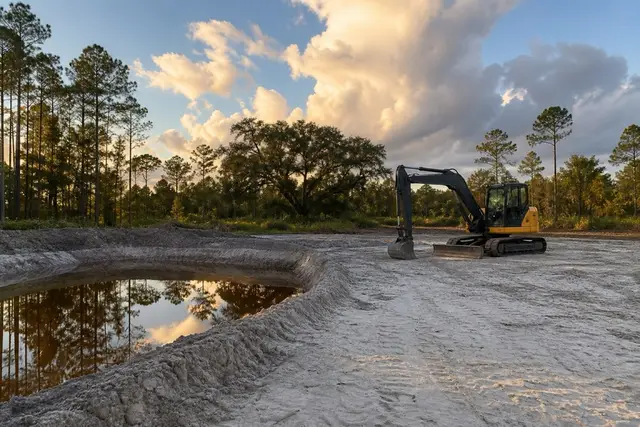
Flagler Clearing Pros connects Palm Coast property owners with a local land clearing contractor for site development support in Palm Coast and the Flagler County communities around it.
Between raw woods and a building permit's first inspection sits a chain of dirt work: clearing, grubbing, demolition of whatever the parcel carried before, pond excavation, fill placement, rough grading, and the erosion control that wraps all of it. Site development support is the umbrella scope — one operation carrying a parcel through that chain, or slotting cleanly into a general contractor's sequence wherever the project needs the muscle.
The value of the combined scope is the absence of seams. When the outfit that cleared the parcel also cuts the pond and places the fill, nobody argues about whose stumps are under the pad, the spoil from the excavation lands where the fill plan needs it instead of where the last machine happened to park, and the erosion-control system evolves with the site instead of being rebuilt for each trade. Projects lose more days to handoffs than to weather; fewer handoffs is schedule.
In this county the chain has a signature link: the stormwater pond. Flagler's flat, high-water-table ground means nearly every commercial project and subdivision phase digs retention — the tea-colored ponds behind every shopping strip are engineered infrastructure, excavated to designed depths and slopes, and their spoil is often the cheapest fill the project will ever own. Sequencing pond excavation against pad filling is local site-work craft at its most literal.
For owners and GCs the practical offer is flexibility: full site packages priced as one scope, or targeted support — clearing ahead of a survey, a pond cut, a fill-and-grade phase — priced to fit an existing plan. Either way the deliverable is the same ground: cleared, shaped, compacted, documented, and ready for the vertical work to start on time.
Why retention ponds run this county's site work
Florida's stormwater rules make every development hold and treat the runoff it creates, and on flatwoods ground with a shallow water table the standard answer is the wet retention pond. The engineering sets volume, depth, and slope; the site-work reality is that pond excavation produces thousands of yards of sandy spoil exactly when the pads need lifting — a coincidence good site sequencing turns into money. Water-table behavior for a given parcel is previewable in the USDA soil survey, and the designed system ultimately discharges toward networks maintained by the city or county.
The support scope treats the pond as the project's borrow pit and its compliance centerpiece at once — dug early, dressed late, and protected from silt the whole way through.
Sequencing against inspections and weather
Site development is a rhythm of hold points: erosion control verified before disturbance, tortoise clearances documented before grubbing, compaction tests before footers, as-builts on the pond before final. A support contractor's job is to arrive at each hold point with the work actually ready — which in Northeast Florida also means playing the seasons. The dry months move dirt fast; the June-through-September pattern tracked by NWS Jacksonville punishes open ground, so smart schedules open no more site than they can stabilize.
The tropical calendar deserves its own line in every schedule: a named system on the National Hurricane Center's map means securing loose material, dewatering plans checked, and silt fence walked — before the rain, not after.