 Flagler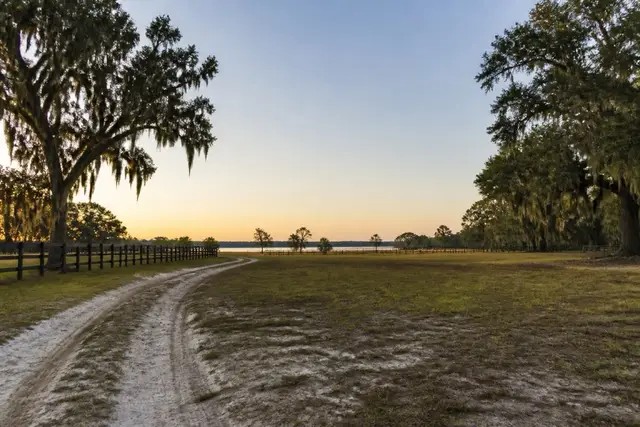
Flagler Clearing Pros connects St. Johns Park property owners with a local land clearing contractor for forestry mulching, lot clearing, and site prep across the St. Johns Park area.
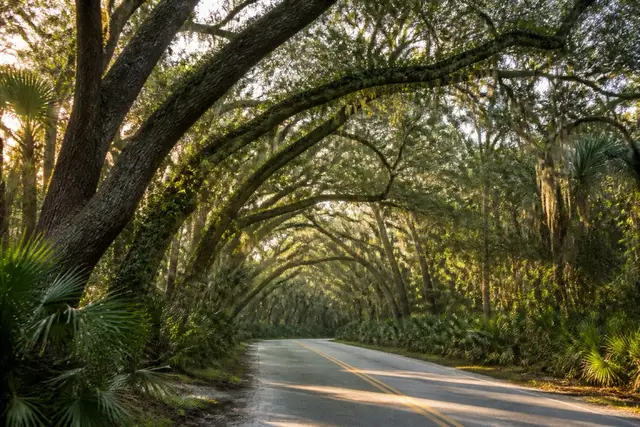
St. Johns Park is Flagler County's far-west corner, out where the county reaches toward Crescent Lake and the St. Johns River basin — old settlement ground of moss-hung oaks, sandy lanes, and rural homesites that feel a century removed from the parkways east of US-1. Clearing here serves homesteads and lake-country acreage: front acres reclaimed, oak canopies cleaned under, lanes and yards held against the woods.
The landscape mixes the county's two personalities. Flatwoods pine and palmetto run the uplands, but the lake influence brings big live oaks, richer low ground, and water that means something — parcels drain toward the basin, and the low spots hold longer. Machines work the same as everywhere; the judgment about where and when they work matters more.
Jobs tend toward restoration: a family place gone shaggy brought back to its old lines, oak islands preserved while the regrowth between them falls, the view to the water reopened past a decade of myrtle. It's satisfying work because the bones are usually good — somebody laid these homesteads out well the first time, and clearing mostly means finding that layout again.
Where the flatwoods meet the lake basin
West of the pine belt, the ground starts answering to Crescent Lake: soils grade richer in the lows, oaks take over from pine on the better ground, and drainage runs toward the basin instead of the ocean. Clearing scopes read that gradient — upland palmetto mulches like anywhere in the county, while low-ground work waits for the dry months and stays out of anything that behaves like wetland without the right sign-offs. Parcel soils are mapped in the USDA Web Soil Survey, and Flagler County handles the permitting questions for this unincorporated corner.
Restoring a homestead's working lines
The typical St. Johns Park project is archaeology with a mulcher: the old fence lines, drive, and yard edges are still there under the regrowth, and the job recovers them rather than inventing new ones. Oaks get arborist-grade respect — cleaned under, never cut into, root zones unburied — with practical guidance available in UF/IFAS publications. And because these are the county's quietest sandy uplands, the gopher tortoise rules get their walk-through here like everywhere else: find the burrows first, flag them, keep the machine 25 feet out.