 Flagler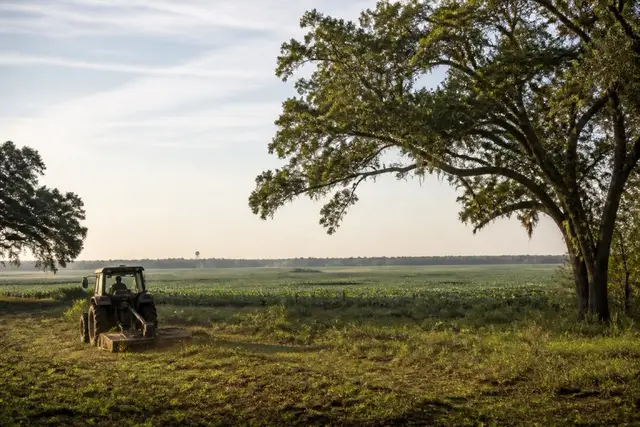

Flagler Clearing Pros connects Bunnell property owners with a local land clearing contractor for forestry mulching, lot clearing, and site prep across the Bunnell area.
Bunnell is Flagler County's seat and its agricultural memory — a town of 3,276 at the 2020 census sitting where State Road 100 crosses US-1, with potato, cabbage, and sod ground running flat to the horizons around it. Clearing work here splits two ways: in-town lots and homestead yards on one hand, and real acreage on the other, where the job is measured in machine-days instead of hours.
The acreage side is what makes Bunnell different from the letter-section work up in Palm Coast. Field edges creep inward a few feet every year the mower skips; fence rows swallow their wire; retired farm ground goes to dog fennel, myrtle, and volunteer pine in a handful of seasons. A tractor-and-mulcher pass returns those margins, and the west side of town runs enough of this work to keep the machines familiar with the ground.
In-town parcels play by county-seat rules rather than Palm Coast's — different permitting authority, similar physics. The sand is the same pale flatwoods profile, the summer water table rides just as high, and gopher tortoises dig the same protected burrows in the dry stretches. A contractor quoting Bunnell walks the parcel with all three in mind and writes the number down before anything starts.
Farm-belt clearing around the county seat
The ground around Bunnell has been worked for a century, and that history shows up in the clearing jobs: old ditch grids that need re-opening as much as the fields need mowing, buried irrigation iron waiting in the fence rows, and soil that transitions from farm loam back to native flatwoods sand inside a single parcel. The USDA soil survey maps those transitions parcel by parcel, and UF/IFAS publications cover the pasture-recovery agronomy that follows a good knockdown mow. County-side permitting questions route through Flagler County, whose offices conveniently sit in town.
Timing acreage work around the wet season
West-county ground drains slower than it looks. The flatwoods water table rises through the summer thunderstorm months, and a field that carried a tractor cleanly in April can rut badly in August. Local operators watch the Jacksonville forecast for dry stretches and bias the heavy mowing and grubbing toward late fall through spring — which also happens to be when the growth stands dormant and cuts cleanest.