 Flagler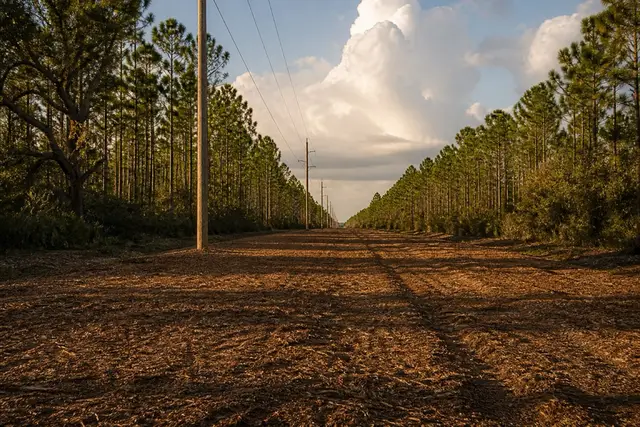
Flagler Clearing Pros connects Palm Coast property owners with a local land clearing contractor for right-of-way clearing in Palm Coast and the Flagler County communities around it.
A right-of-way only works while it stays open. Utility easements need clear ground for line access and sight inspection; drainage corridors need their flow lines free of woody growth that slows water and traps debris; access easements need to remain drivable the day someone finally needs them. Right-of-way clearing is the recurring, production-scale version of brush work — long, linear, and judged by consistency rather than artistry.
The Florida growth engine makes it a calendar business. A corridor cut to bare ground in January carries knee-high regrowth by June and a woody problem by the second summer skipped. Serious corridor owners — utilities, HOAs with common-area easements, agencies with ditch networks — put the work on cycle, and the per-mile price of a maintained corridor runs far below the cost of re-conquering an abandoned one.
Equipment matches the geometry: tracked mulchers walk fence-to-fence widths at a steady pace, boom-mounted heads reach down ditch slopes and up into encroaching canopy, and rotary decks handle the grassed shoulders. Production numbers matter on linear work, but so do the stopping rules — flagged culvert ends, marker posts, and the crossings where a machine yields to whatever the corridor exists to carry.
For commercial clients the deliverable is documentation as much as cut brush: footage completed, obstructions found, washouts and exposed pipe noted while a machine and operator were already on the line. A corridor pass is the cheapest inspection those assets will ever get.
Drainage corridors: clearing that moves water
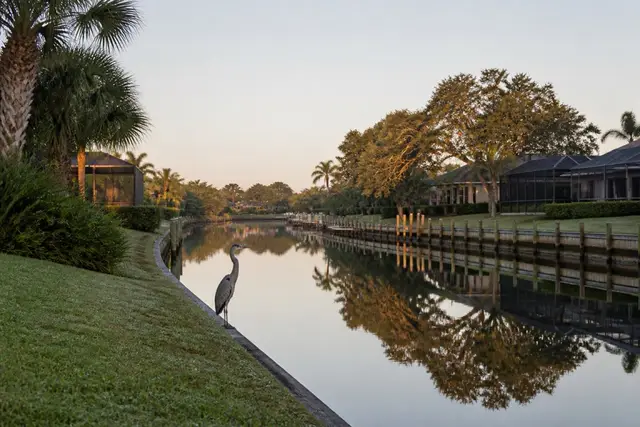
Flagler County's flatwoods drain through engineered networks — the swale-and-canal system inside Palm Coast, agricultural ditch grids in the west county — and vegetation is those systems' slow saboteur. Woody growth in a ditch line snags storm debris, roots break down banks, and a choked corridor turns a designed flow into a chain of ponds. Clearing restores capacity ahead of the wet season, which is why the smart schedule finishes ditch work in spring, before the summer thunderstorm pattern tests it daily.
The cutting itself respects the channel: mulched material stays out of the flow line, banks get mowed rather than gouged, and equipment works from the top of slope. Public-side questions about who maintains which segment route through the city or the county — a distinction worth settling before anyone cuts the wrong ditch.
Working inside someone else's rules
Corridor work almost always happens on land with more than one stakeholder — an easement crosses private parcels, a utility owns the equipment overhead, an agency owns the maintenance duty. The professional pattern is notification and boundaries: owners along the run informed before machines arrive, gates and fences restored behind the work, cut kept to the recorded easement width rather than the convenient one. Wildlife rules ride along too: the corridor's dry sandy stretches are gopher tortoise country like everywhere else in this county, and FWC's burrow rules apply on an easement exactly as they do on a homesite.
Contracts on recurring corridors tend to reward the operator who documents — before-and-after footage logs and found-condition notes make renewals easy and disputes short.