 Flagler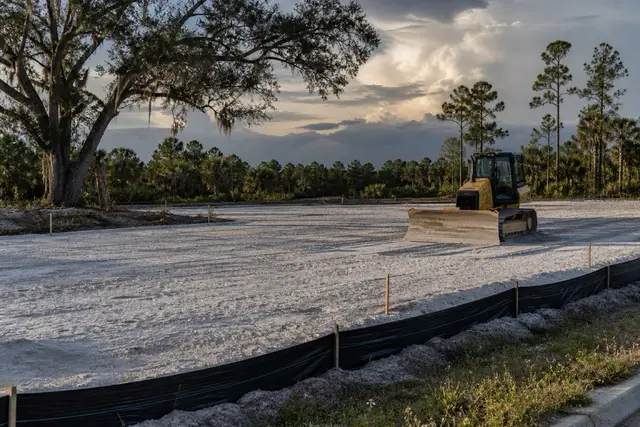
Flagler Clearing Pros connects Palm Coast property owners with a local land clearing contractor for grading & site prep in Palm Coast and the Flagler County communities around it.
Clearing gets the vegetation off; grading decides whether the land actually works. On a Palm Coast lot that means shaping loose gray sand into a pad that holds elevation, restoring the fall toward the front swale, and compacting in lifts so the ground under a future slab behaves like structure instead of like beach. It is the least photogenic stage of site work and the one most likely to be felt for the life of the building.
Flatwoods ground brings two specific quirks. First, the sand itself: Myakka-type soils are uniform and easy to move but need methodical compaction to develop bearing, and they sit over a hardpan layer that keeps the water table close in wet months. Second, the water: these plats were engineered so every lot sheds to a swale-and-canal system, and a grade job that interrupts those flow lines makes the lot — and sometimes the neighbor's — hold water it never held before.
Good site prep is therefore mostly discipline. Establish the pad elevation off the plan or the neighboring slabs, cut and fill to it, compact in lifts rather than in one heroic layer, and finish with the crown and side slopes that push stormwater around the building envelope and out to the street. Silt fence goes up where sand could migrate; the swale gets dressed, not buried.
The service pairs naturally with clearing because the same mobilization covers both — the machine that grubbed the lot in the morning can be cutting grade by afternoon. For owner-builders, that combined scope also means one contractor owns the ground condition end to end, with no gap for blame to fall into.
Compaction in sugar sand: why lifts matter
Loose Florida fine sand can lose significant volume when it densifies, which is why fill dumped in one thick layer and rolled once will settle for years afterward. The working method is lifts — fill placed and compacted a course at a time, moisture-conditioned so the particles lock. Soil behavior for a given parcel is checkable in advance through the USDA Web Soil Survey, and the Myakka series description explains the shallow water table that sets how deep anyone should dig in July.
Builders here often require compaction testing on pads before footers pour; a grade contractor who welcomes the testing truck rather than negotiating with it is telling you something about the work.
Draining to the swale, not the neighbor
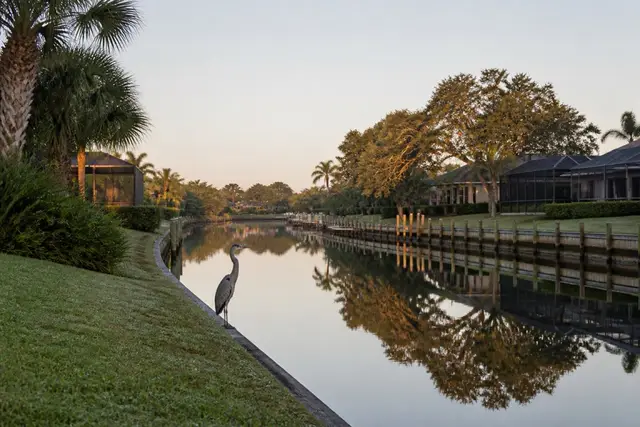
Palm Coast's residential drainage is a connected system: lot to swale, swale to culvert, culvert to the freshwater canal network, and onward. Grading has one non-negotiable job inside that system — keep your lot's water moving along its designed path. That means preserving the front swale profile, never damming a side property line with spoil, and setting the pad high enough that the slab sits above the street's wet-season water line. The city maintains the public side of that chain and has little humor about private fill blocking it.
Wet-season scheduling is part of the craft: after a week of daily storms, cutting grade in saturated sand does more harm than waiting three dry days, and an operator who says "Thursday, not Monday" is usually saving you money. Forecast context comes free from NWS Jacksonville.